
Meksea At Vietnam Seafood Summit 2026: Decoding Buyer Demands & The Roadmap To 2029


On November 11, 2026, at the Muong Thanh Luxury Can Tho Hotel, the Vietnam Association of Seafood Exporters and Producers (VASEP) officially convened the Vietnam Seafood Summit 2026 (VSS 2026) around the theme “Seafood Market Outlook 2027-2029: Opportunities and Headroom for Double-Digit Export Growth”. Marking VASEP’s inaugural comprehensive summit model, the event brought together corporate executives, market analysts, and key representatives across the entire seafood value chain. As a experienced seafood trade connector, Meksea was deeply honored to contribute to the overall success of this landmark event.
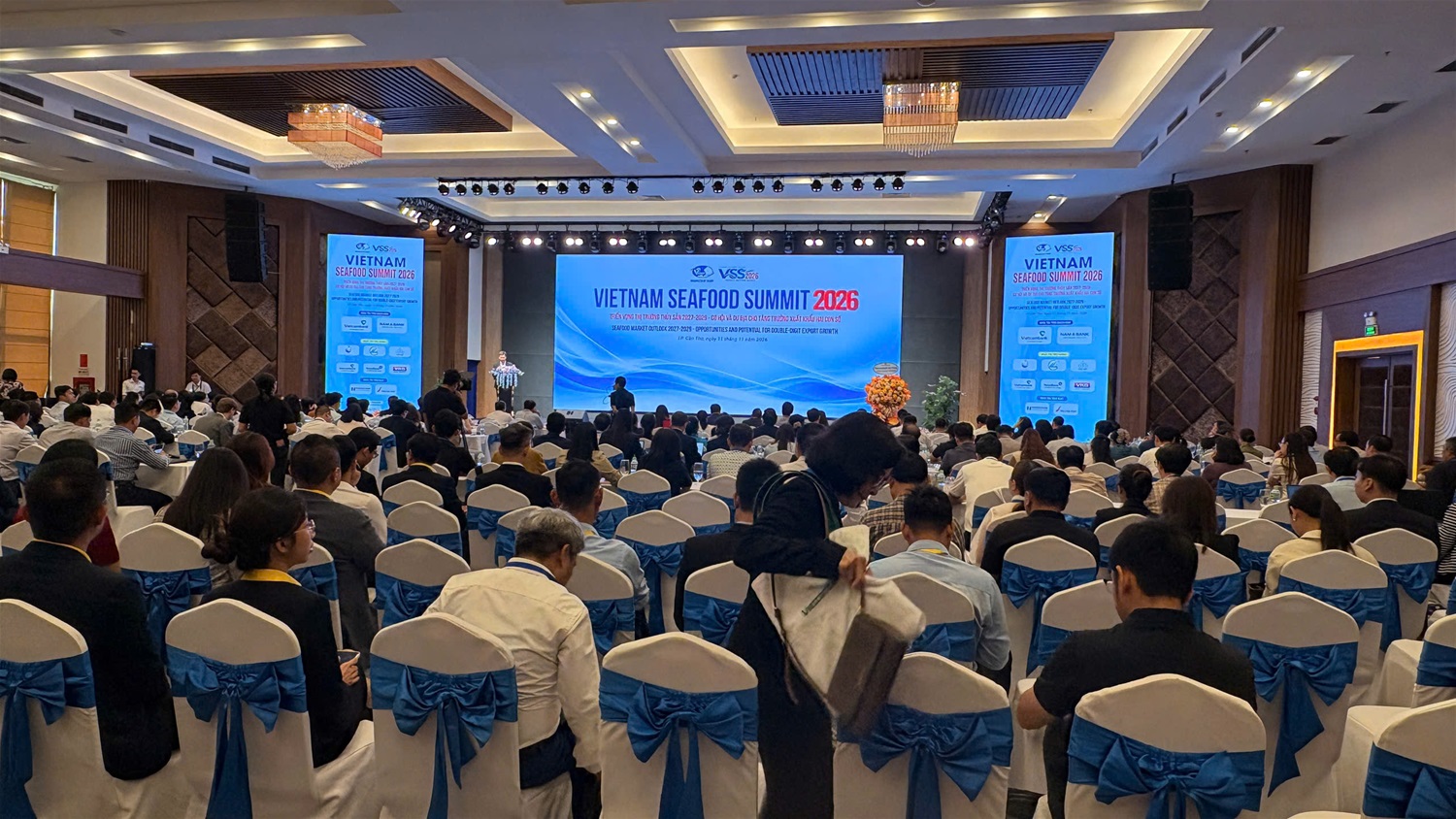
PANORAMIC OPENING OF VSS 2026 (Source: VASEP)
1
Quick view
CEO Hoang Van Duy – Meksea’s Speaker at VSS 2026
The spotlight of the Summit’s afternoon agenda centered on Session 4: “What Will Buyers Need in the Coming Years?”, a panel dedicated to decoding international purchasing criteria and market trajectories for 2027–2029.
As global retail channels and importers adjust to shifting consumer spending and stricter regulatory mandates, buyers are moving beyond price negotiations to prioritize verified sustainability (ESG), supply chain transparency, and delivery reliability.
Representing Mekong Seafood Connection Co., Ltd. (Meksea) as a key panel speaker, Mr. Hoang Van Duy, Chief Executive Officer, contributed vital commercial perspectives. Drawing on Meksea’s experience as a premier seafood trade connector bridging Vietnamese processors with global markets, Mr. Duy shared practical insights into evolving buyer requirements, order trends, and market entry strategies across major export destinations.

Strategic Product Selection Framework (2027–2029)
Mr. Duy outlined Meksea’s structured approach to identifying and developing long-term export items:
- Market Demand & Supply Readiness: Prioritizing new products where buyer interest is strong across target markets, backed by ready raw material sources in Vietnam.
- Blue Ocean vs. Red Ocean Strategy: For “Blue Ocean” products (value-added), Meksea strategically targets deep-processed items, organic/ASC/BAP certifications, and private-label premium ranges to unlock specialized, high-margin demand. Conversely, for commodity products in crowded markets (“Red Ocean”), achieving a competitive edge demands significantly greater, multi-dimensional operational effort – requiring businesses to build distinct, strengths across product quality, specialized sizing, cost optimization, and comprehensive post-sales service to compete effectively against fierce global rivals.
- Risk Control: Avoiding product-market combinations with unmanageable regulatory barriers or safety risks (such as strict antibiotic residue scrutiny).
Four Core Criteria for Long-Term Portfolio Inclusion:
- Substantial & Continuous Demand: Stable market demand spanning multiple product specifications.
- Competitive Advantage: Leveraging Vietnam’s raw material strengths, production expertise, and robust marketing/sales channels.
- Sustainable & Farmed Origin: Prioritizing stable, farmed sources over wild-caught fisheries to align with Ministry of Agriculture and VASEP sustainability guidelines.
- Low Regulatory Hurdles: Promoting products free from complex Catch Certificates (CC), Certificates of Acceptance (COA), or anti-dumping/countervailing duties.
Market Opportunities in Key Species: The White Fish Trio & Lobster
Mr. Duy highlighted significant growth headroom in specific high-value species:
The strategic “White Fish Trio” (Pangasius – Tilapia – Barramundi)
Mr. Duy envisioned this trio as Vietnam’s strategic pillar to maintain global leadership in white fish exports.
- Pangasius: Serving as the foundational volume pillar of Vietnam’s white fish exports, Pangasius offers stable global supply. Growth over the next three years hinges on strategic segmentation balancing standard frozen fillets with value-added processed cuts and eco-certified offerings to capture diverse price segments.
- Tilapia: With exports exceeding $104 million in 9M 2026, Tilapia holds vast headroom across the US, Brazil, Saudi Arabia, Japan, EU, CPTPP, and African markets. High-spending markets demand certified fillets (ASC/BAP/BRC) and ready-to-cook items, while cost-sensitive markets favor whole gutted or steak cuts.
- Barramundi: Positioned as a premium white fish bridging farmed species and wild-caught fish (e.g., Alaska pollock). Opportunities span both price-competitive markets (Mexico, SE Asia, Australia) and high-end buyers requiring wild-farmed, eco-certified ocean culture (US, EU, resort islands).
Lobster (Green & Tropical Rock Lobster)
- Standing as a top-3 seafood export pillar, reaching ~$830 million in 9M 2026 and projected to hit $1 billion in 2026. Meksea advocates developing lobster tails, cooked lobster, lobster meat, and ready-to-eat lobster soup. Unlocking full potential requires establishing a complete value chain to resolve seed stock quality, weather risks, and raw material price volatility. Regarding market expansion, China remains a primary destination for live and frozen formats, while demand expands across Taiwan, Hong Kong, Singapore, Thailand, Philippines, Malaysia, the Middle East, and Maldives.


Congratulating the Success of Vietnam Seafood Summit 2026
It marks a major milestone in driving Vietnam’s seafood sector toward sustainable, double-digit growth.
Full-year figures are projected to top $12 billion. However, facing macroeconomic volatility, shifting tariff policies, trade defense barriers, and heightened sustainability mandates, VASEP outlined three export growth scenarios for the 2027–2029 period:
Mekong Seafood Connection extend our warmest congratulations to VASEP on the triumphant hosting of VSS 2026. As an inaugural summit model, it served as a vital strategic compass for the industry, mapping out roadmaps to bridge the $1.7 billion gap between baseline growth forecasts and the ambitious $16 billion target set for 2029.